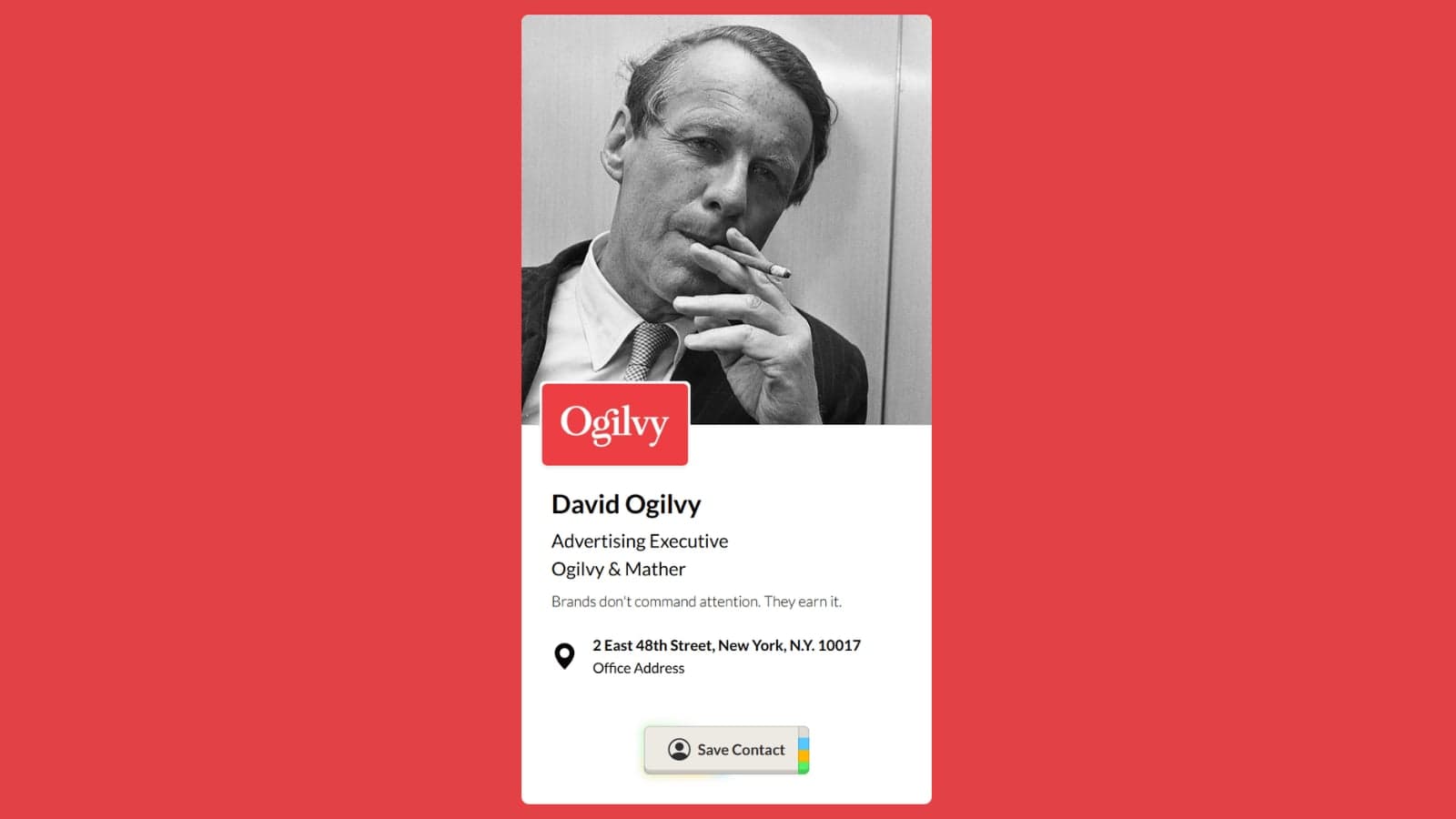
At Lynkle, we think a lot about first impressions. Your digital business card is often the very first interaction someone has with your professional brand, and that moment matters. To understand why, it helps to look back at one of the most influential figures in the history of communication and persuasion: David Ogilvy.
Ogilvy, often called the “Father of Advertising,” built his career on a simple belief: the way you present yourself and your message determines whether people pay attention or move on. His principles shaped some of the most iconic advertising campaigns of the 20th century, and they remain just as relevant today, especially when it comes to how professionals present themselves in a digital-first world.
Why study historical advertising today?
It might seem unusual to draw lessons from a mid-century ad man when talking about digital business cards, but Ogilvy's insights are timeless because they are rooted in human psychology, not technology. The tools have changed. We have moved from print ads and television spots to QR codes and NFC taps. But the fundamentals of capturing attention, building trust, and making a lasting impression have not changed at all. Understanding these principles gives you an edge in how you design, present, and share your professional identity.
Five key principles from Ogilvy
1. “The most important decision”: Positioning
Ogilvy believed that the most important decision in advertising was how to position your product. The same applies to your professional brand. Your digital business card is not just a list of contact details. It is a positioning statement. What do you want people to think when they see your card? Are you a creative innovator, a trusted advisor, a technical expert? Every element of your card, from your headline to your photo to the links you include, should reinforce that positioning consistently and intentionally.
2. “Large promise”: Your Value Proposition
Ogilvy said that every advertisement should contain a “large promise” that tells the audience what they stand to gain. Your digital card should do the same. Instead of a generic title like “Consultant,” lead with a value-driven headline that communicates what you help people achieve. The promise is what makes someone save your contact, click your link, or schedule a meeting instead of swiping past.
3. “Big Ideas”: Standing Out
Ogilvy was obsessed with what he called “Big Ideas”, concepts bold enough to cut through the noise and capture attention.
“Unless your advertising contains a big idea, it will pass like a ship in the night. It takes a big idea to jolt the consumer out of their indifference.”
In the context of your digital business card, the “big idea” is whatever makes you distinctly memorable. It could be a striking visual design, a unique headline, an embedded video introduction, or a direct link to a portfolio piece that showcases your best work. The goal is to create a moment of genuine interest that separates you from the dozens of other contacts someone collects at a conference or event.
4. “Don't be a bore”: Creativity Wins
Ogilvy warned against being dull. He understood that people are bombarded with information and that the only way to earn their attention is to be genuinely interesting. Your digital card should reflect this. A plain card with just a name and phone number is forgettable. A card with personality, whether through your photo, your color palette, a clever headline, or curated links to your most impressive work, invites people to engage. Creativity does not mean being flashy or gimmicky. It means being thoughtfully distinctive.
5. “Go the whole hog”: Commitment to Excellence
Ogilvy believed in doing things properly or not at all. Half-hearted efforts produce half-hearted results. This applies directly to your digital business card. Take the time to choose a great photo, write a compelling headline, select your links carefully, and ensure your branding is consistent. A card that looks like it was thrown together in two minutes sends the message that you do not take your professional presence seriously. A card that is polished and intentional tells the world that you care about the details, and that is exactly the kind of person people want to do business with. For practical tips on applying these principles, see our guide on designing your digital business card.
Related reading
Ready to start your digital business card journey?
Get started for freeTrusted by the best