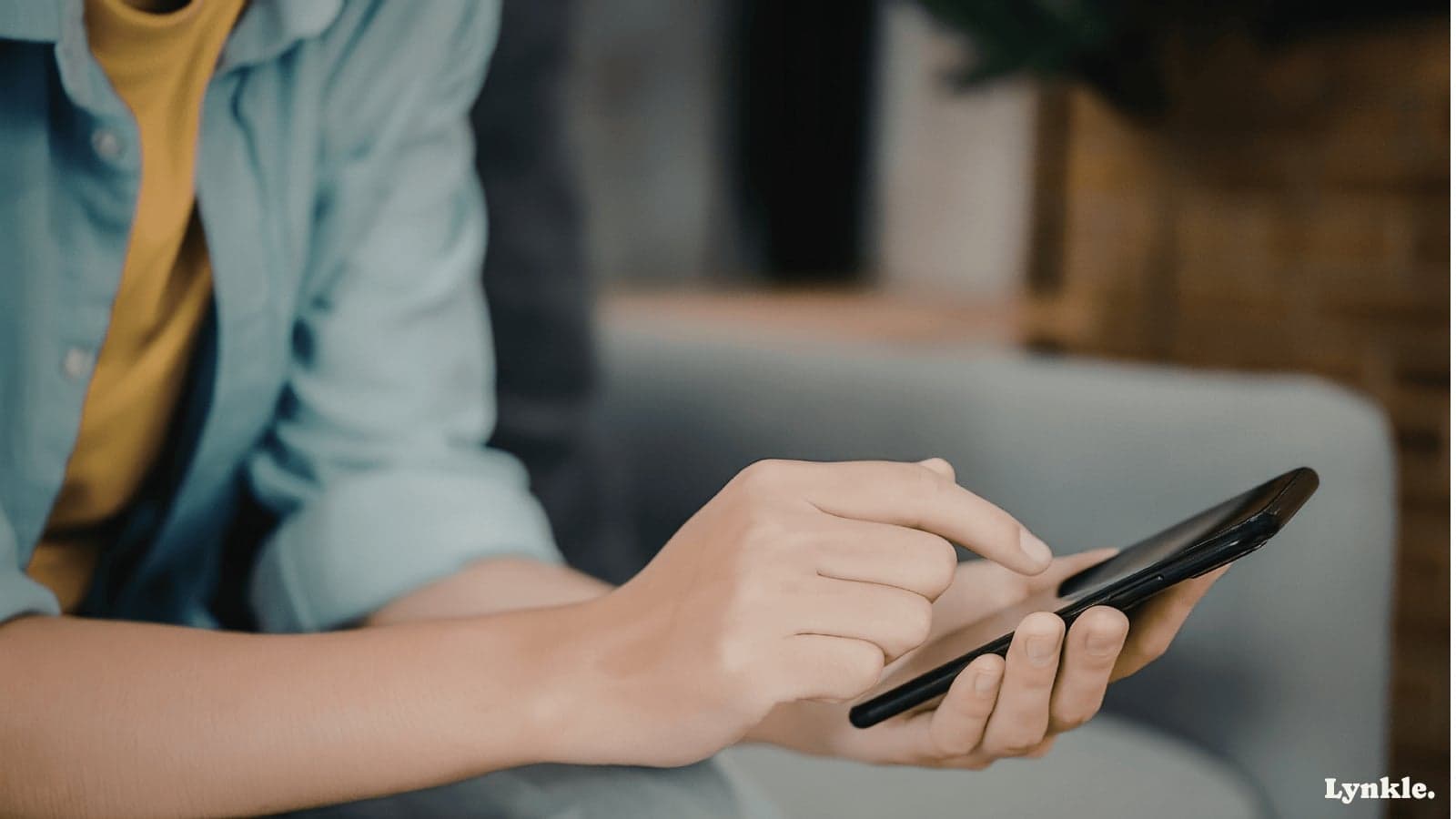
A contactless business card lets you share your contact information without handing over anything physical. Recipients scan a QR code, tap an NFC tag, or open a link, and your card appears in their browser instantly. Unlike paper cards that get lost in pockets and desk drawers, a contactless business card stays accessible, always up to date, and ready to share at any moment.
How contactless business cards work
A contactless business card is a digital card hosted online at a unique URL, like lynkle.com/yourname. When someone accesses that URL through any method (scanning a QR code, tapping an NFC-enabled device, or clicking a shared link), your full card opens in their mobile browser. The recipient does not need an app. As the sender, you can use Tap to Share in the Lynkle Android app for phone-to-phone NFC sharing with Lynkle Pro or Teams. The recipient sees your name, photo, title, contact details, social profiles, and any links you have added. From there, they can save your contact to their phone with a single tap.
Because the card lives online, you can update your information at any time. Change your job title, phone number, or company, and every future scan or tap reflects the latest version. There is no reprinting, no redistributing, and no outdated cards floating around.
Three ways to share contactlessly
Contactless sharing works through three primary methods, each suited to different situations. You can use one or combine all three depending on the context.
QR code
Your digital business card comes with a unique QR code that anyone can scan using their phone camera. You can display the QR code directly from your phone screen, add it to your Apple Wallet or Google Wallet, print it on a presentation slide, or include it on your desk nameplate. The recipient points their camera at the code, taps the notification, and your card opens instantly. For a deeper look at QR-based sharing, see our guide on QR code business cards.
- In-person meetings. Pull up the QR code from your phone or wallet pass and let the other person scan it.
- Presentations and webinars. Add your QR code to your closing slide so attendees can connect with you afterward.
- Printed materials. Place your QR code on brochures, posters, or booth signage at events.
NFC tap
NFC (Near Field Communication) lets you share your card phone to phone from the Lynkle Android app with Tap to Share. You do not need a physical card or tag, but Tap to Share requires Lynkle Pro or Teams. It is also available on iOS only in the European Economic Area. The recipient's phone opens your card in the browser without requiring the Lynkle app.
If you prefer a physical tap point, pair your Lynkle card with any compatible third-party NFC card or tag through the Lynkle app on Android or iOS. Learn more about both paths in our NFC business card guide.
- Networking events. Use Tap to Share from your Android phone when you do not want to carry separate hardware.
- Retail and front desk. Attach an NFC tag to a counter stand so visitors can tap and save your details on the spot.
- Client meetings. Share phone to phone, or carry a paired third-party NFC card if that suits the setting.
Personal link
Every Lynkle card has a permanent, shareable URL. You can send it via text message, email, LinkedIn DM, or any messaging app. You can also add it to your email signature, social media bios, and calendar invites. Because it is a live link, the recipient always sees the most current version of your card no matter when they open it.
- Email signatures. Add your free card link to an existing signature, or choose a branded email signature with Lynkle Pro or Teams. Recipients click it to open your card in their browser.
- Social media bios. Pin your link on LinkedIn, Instagram, or Twitter/X so anyone who finds your profile can access your full contact details.
- Follow-up messages. After meeting someone, send your link as a quick follow-up instead of dictating your phone number.
Why contactless networking is the new standard
The shift toward contactless business cards has been accelerating steadily, driven by practical advantages that paper cards simply cannot match.
- Hygiene-conscious since COVID. The pandemic changed how people think about physical exchanges. Passing objects hand to hand is no longer the default in many professional settings, and contactless sharing removes that friction entirely.
- Faster than paper. A QR scan or NFC tap is quick. There is no fumbling through a wallet, no spelling out email addresses, and no waiting for someone to find a pen.
- Always up to date. When your details change, you update your card once and every future interaction reflects the new information. No reprints, no redistribution.
Best use cases for contactless cards
Contactless business cards work in virtually any professional context, but some environments benefit more than others.
- Healthcare settings. Hospitals, clinics, and laboratories prioritize sterile environments. Handing paper back and forth between patients, colleagues, and referral partners introduces unnecessary contact. A contactless card lets healthcare professionals share credentials, booking links, and referral information without touching anything.
- Events and conferences. Conference floors are fast paced. Attendees meet dozens of people in a single day, and paper cards pile up into an unmanageable stack. Scanning a QR code or using phone-to-phone Tap to Share opens the card on the recipient's phone, reducing the risk of losing a key connection in the shuffle.
- Client meetings. Walking into a client meeting with a contactless card signals that you are organized and tech-forward. It also ensures the client has your most current information before, during, and after the meeting.
- Retail and hospitality. Store managers, hotel concierges, and restaurant owners can place an NFC tag at the front desk or register. Customers tap to get contact details, menus, loyalty programs, or social media links without any paper exchange.
Contactless cards for teams
For organizations with multiple employees sharing cards daily, contactless digital cards offer centralized control that paper never could. Administrators can create branded templates that lock down logos, colors, and layouts while allowing each team member to personalize their own name, title, and contact information. When someone changes roles or leaves the company, their card can be updated or deactivated instantly from a single dashboard.
Lynkle's Teams plan is built for this. Every card stays on-brand, every contact interaction is tracked, and new team members get their card on day one with no printing delays. Managers gain visibility into how their team networks, which events drive the most connections, and where follow-up opportunities exist.
For more on sharing methods, explore our guides on Apple Wallet business cards and how to share your digital business card.
Related reading
Ready to start your digital business card journey?
Get started for freeTrusted by the best