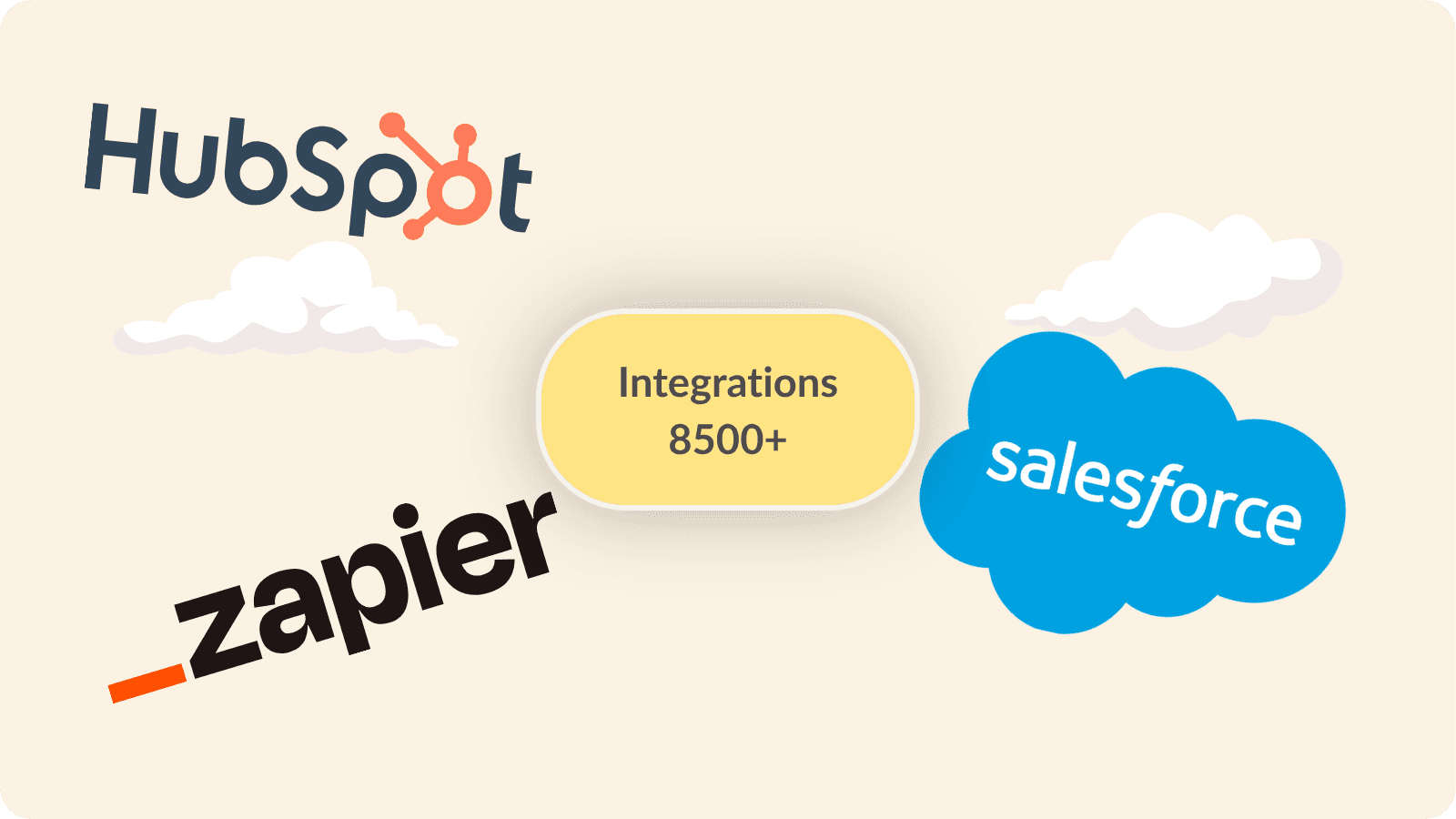
Digital business card CRM integration is the automatic syncing of contacts captured through your digital card into a contact management system or CRM, so every lead lands in your pipeline without manual data entry. Lynkle syncs personal cards to Google Contacts and Microsoft Outlook, and connects Lynkle Teams cards to Salesforce at the organization level.
This guide covers how CRM sync works end to end, which integrations Lynkle ships today, what changes when you roll it out across a sales team, and the specific features to evaluate when comparing platforms.
Why CRM integration matters for digital business cards
Without CRM integration, a digital business card only solves half the problem. You share your details faster, but every lead you collect still has to be typed into a spreadsheet or CRM after the fact. That costs you in four ways:
- Hours of post-event data entry. After a conference, reps spend hours transcribing contacts into the CRM. The work is slow, tedious, and pulls time away from selling.
- Lost leads between exchange and entry. The longer a contact sits on a napkin or in a phone's camera roll, the more likely it is to slip through the cracks. A three-day delay between meeting someone and logging them can mean a missed deal.
- Dirty CRM data. Mistyped email addresses, transposed phone numbers, and misspelled names poison outreach and break automation downstream.
- No visibility for managers. Sales leaders cannot see who their team met at an event until someone gets around to updating the CRM, which delays coaching and forecasting.
HubSpot's research on sales productivity has consistently found that reps lose roughly one in five working hours to manual data entry. A card that auto-syncs to your CRM removes that task for every contact captured through it.
How digital business card CRM sync works
The flow from card exchange to CRM record is the same regardless of which CRM you connect:
- You share your digital business card via QR code, NFC tap, Apple Wallet, Google Wallet, or link.
- The recipient views your card in their browser, with no app to install, and can save your contact details directly.
- A built-in lead capture form invites them to share their own details back. For more on this flow, see the lead collection documentation.
- The captured lead is written to your connected CRM or contact app in real time, with the rep who collected the lead automatically tagged as the owner.
Two things matter here. First, sync is two-way: you hand over your info and capture theirs in the same tap. Second, the write happens in seconds, not in a nightly batch, so automated follow-up sequences can fire while the conversation is still fresh.
Which CRMs Lynkle integrates with
Lynkle connects your digital business card to the contact management and CRM tools your team already uses. Which integrations you get depends on your plan:
- Google Contacts (all plans). Leads captured through your card sync to Google Contacts in real time, so they appear in Gmail, Google Calendar, and every tool connected to your Google account.
- Microsoft Outlook (all plans). Leads sync to your Outlook address book across desktop, web, and mobile, and flow into any Microsoft 365 tools linked to your account.
- Salesforce (Lynkle Teams). Lynkle Teams connects at the organization level and writes every captured lead into Salesforce as a Lead or Contact record, with the rep who collected the lead set as the record owner.
Connecting an integration takes a minute: you authorize Lynkle via OAuth in your CRM, pick which record type you want to sync to, and new leads start flowing from that point on.
Salesforce integration for Lynkle Teams
Salesforce is where most B2B sales teams live, so it gets a dedicated integration on Lynkle Teams. A Salesforce admin and an organization owner on Lynkle connect the two systems once, and every team member's card feeds into the same Salesforce org from then on.
- Leads or Contacts. Choose whether new leads from cards create Lead records (for the top of your funnel) or Contact records (when you already have an Account they belong to). The choice is per-organization, so every rep's leads land in the same object.
- Automatic owner assignment. The Salesforce record owner is set to the Lynkle user who captured the lead. Territory rules, round-robin assignment, and follow-up workflows all trigger against the correct rep with no manual routing.
- Org-level authorization. One Salesforce admin authorizes Lynkle for the whole organization. You do not need to have every rep connect their own Salesforce account.
- Source attribution. Every record created through Lynkle is tagged so you can filter Salesforce reports by leads captured from cards and measure event ROI against other sources.
For step-by-step setup, including the External Client App configuration on the Salesforce side, see the Salesforce integration documentation.
What changes when CRM sync is live for a sales team
The benefits compound once every member of a sales team is using CRM-connected cards. You move from a world where leads arrive in the CRM on a lag to one where the CRM reflects reality within seconds of every handshake:
- Centralized lead dashboard. All contacts captured by any team member appear in one place. Managers see every connection without waiting for reps to update records.
- Pipeline visibility. Track the path from card exchange to closed deal using the same reports you already run.
- Event ROI measurement. Compare lead volume and quality across conferences, trade shows, and meetings. Double down on the events that generate pipeline.
- Automated follow-up. Because records land in the CRM in real time, Salesforce flows, HubSpot sequences, and other drip tools fire against fresh leads while interest is highest.
For more on how sales orgs operationalize this, see our guide to digital business cards for sales teams.
What to look for in a digital business card with CRM integration
- Automatic sync, not manual export. Leads should flow into your CRM without any extra steps. If you have to download a CSV and import it, the integration is a feature in name only.
- Real-time syncing. Records should appear in your CRM within seconds of being captured, not in a scheduled overnight job.
- Native lead capture form. The card itself should collect the other person's details. Relying on the recipient to fill out a separate form loses most leads.
- Record owner attribution. The integration should tag the rep who captured the lead, so routing rules and commission attribution work without manual cleanup.
- Organization-level admin. For teams, one admin should be able to connect the CRM for the whole org rather than every rep authorizing their own account.
- Works with your existing stack. The platform should cover your CRM of choice plus the contact apps (Google, Outlook) your reps use day to day.
For more on rolling this out across a larger organization, see our guide on digital business cards at enterprise scale.
Related reading
Ready to start your digital business card journey?
Get started for freeTrusted by the best